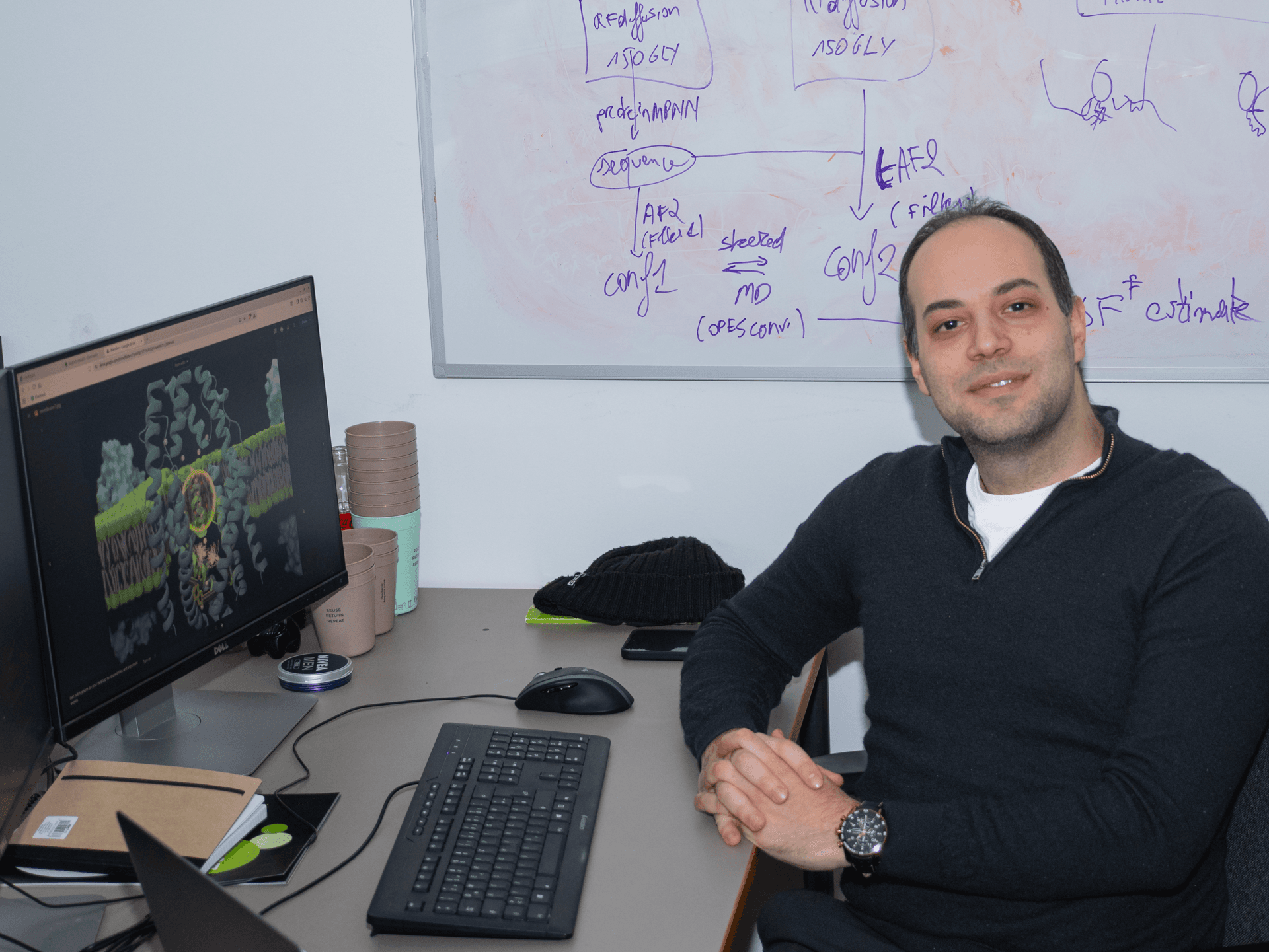
Computational Drug Discovery Scientist
Berke
Türkaydin
Decoding membrane protein dynamics through molecular simulation, generative design, and machine learning; translating atomistic insight into drug discovery decisions.
About
Where Computation Meets the Bench
I am a computational drug discovery scientist with over 6 years of experience at the interface of biophysics, structural biology, and data-driven modeling. My PhD research focuses on ion channels and complex membrane proteins, using molecular dynamics simulations to decode allosteric mechanisms and conformational landscapes.
I specialize in translating experimental questions into computational hypotheses, combining MD methods and ML-based approaches with Python-driven analysis pipelines to extract mechanistic insight and guide drug discovery campaigns.
Beyond simulation, I am passionate about scientific visualization: I create publication-quality illustrations and cinematic MD trajectory movies using Blender, PyMOL, VMD, and Affinity Designer. I am actively expanding into ML-based protein design, generative models for small molecules, and structure prediction pipelines.
Education
2021–2026
PhD — Computational Biophysics & Structural Chemistry
FMP Berlin — Technische Universitat Berlin
Protein dynamics, allostery, ion channels, protein–ligand interactions
2018–2021
MSc — Biochemistry
Freie Universitat Berlin
Structural characterization and biophysical analysis of proteins
2012–2018
BSc — Molecular Biology
Istanbul Technical University
Molecular biology foundations
Work
Research Highlights
Executed extensive multi-microsecond molecular dynamics simulations (including OPES-enhanced sampling) of TREK K2P channel constructs to map the free-energy landscape of gating and conduction states. Developed and validated custom collective variables and used kernel-based reweighting to extract high-resolution free-energy surfaces differentiating up- and down-states of the channel. Designed and implemented high-throughput simulation workflows on several different HPC environments and cloud-based simulation infrastructure. Executed protein-ligand MD simulations to understand atomistic effect and stability of small molecules. Parameterized phosphorylation mimics and lipid-tether modifications to probe how the cytosolic proximal C-terminus (pCt) couples with the selectivity filter (SF), and demonstrated two distinct allosteric pathways controlling ion conduction. Worked closely with experimental collaborators, communicated simulation results to electrophysiologists.
Applied machine learning workflows to extract high-value structural features from large-scale MD simulations of membrane proteins and ion channels. Built PyTorch-based models for dimensionality reduction (autoencoders / tICA-inspired networks) and clustering to identify hidden conformational states and transition pathways. Integrated RDKit to engineer chemical and molecular descriptors, improving ligand-recognition features and enhancing interpretation of protein–ligand trajectories. Used ML-driven insights to optimize MD simulations, including: selecting more informative collective variables, initializing enhanced-sampling runs from ML-identified metastable states, prioritizing sampling regions predicted to impact energetic barriers.
Performed extensive OPES-enhanced MD simulations to explore the free-energy landscape of TREK K2P ion channels and understand allosteric coupling mechanisms. Designed and optimized collective variables to capture functionally relevant conformational transitions. Applied kernel reweighting and advanced analysis pipelines to reconstruct accurate free-energy surfaces. Identified structural pathways through which phosphorylation, membrane-stretch and a disease mutant modulates gating and channel dynamics. Communicated mechanistic insights to interdisciplinary collaborators and contributed to manuscript development.
Skills
Technical Expertise
Molecular Simulation
Enhanced Sampling & Free Energy
Structural Biology & Docking
Visualization & Design
Data & Programming
ML & AI
Infrastructure & HPC
Research
Publications
Google ScholarEnergetic cross-talk of filter gate and lower helices drives polymodal regulation and disease in TREK K2P channels
Berke Türkaydin, Valerio Rizzi, Chaimae Benkerdagh, Simon Ghysbrecht, Simone Aureli, Thomas Baukrowitz, Marcus Schewe, Francesco Luigi Gervasio, Han Sun
Nature Communications (Under Review) · 2026
Visualization
Scientific Portfolio
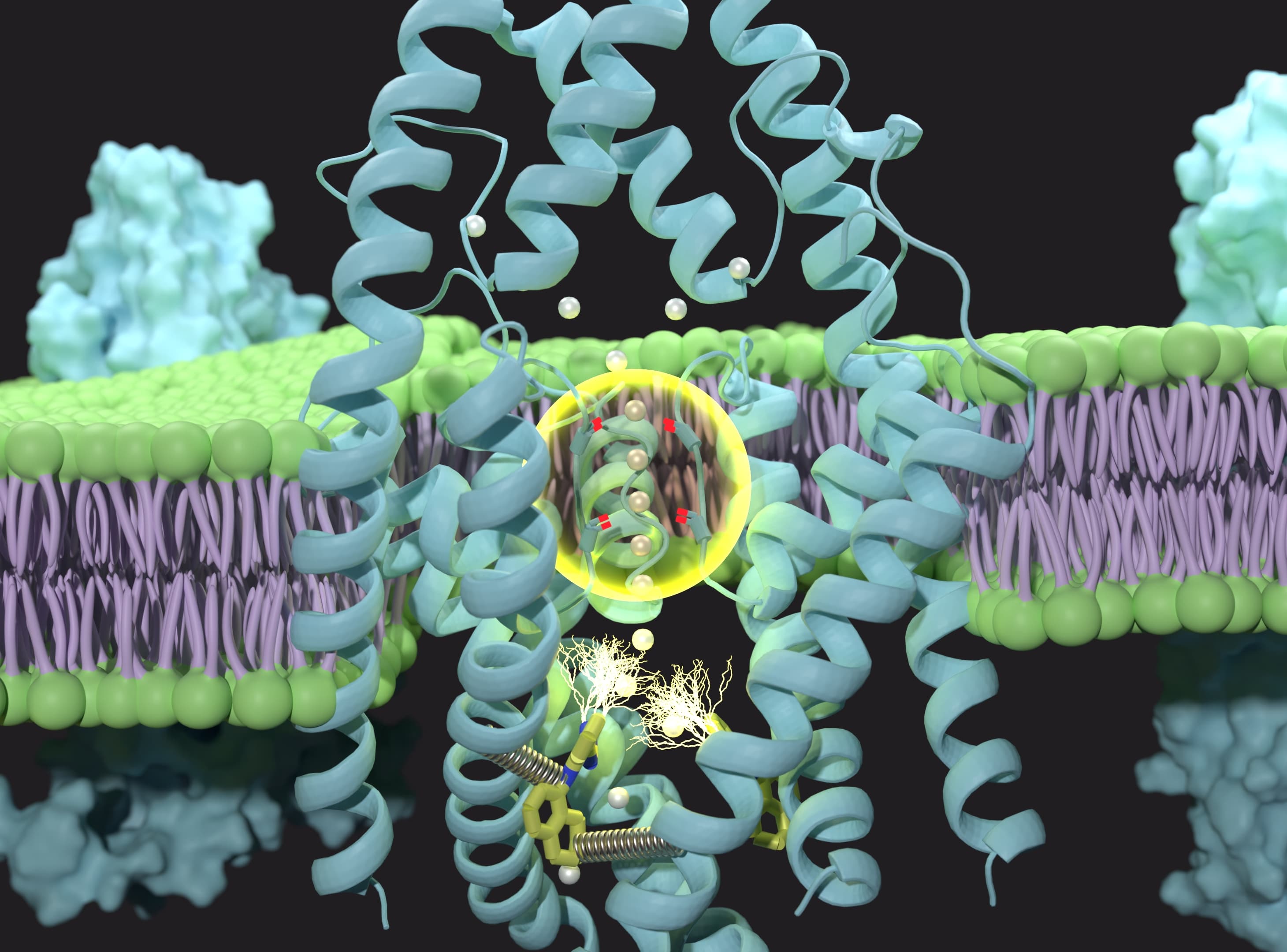
Allostery at the Membrane Interface
Atomistic portrait of BL1249 docked at the fenestration of TREK2 — a small molecule that modulates channel gating without ever contacting the selectivity filter, acting entirely through long-range allosteric coupling across the lipid bilayer.
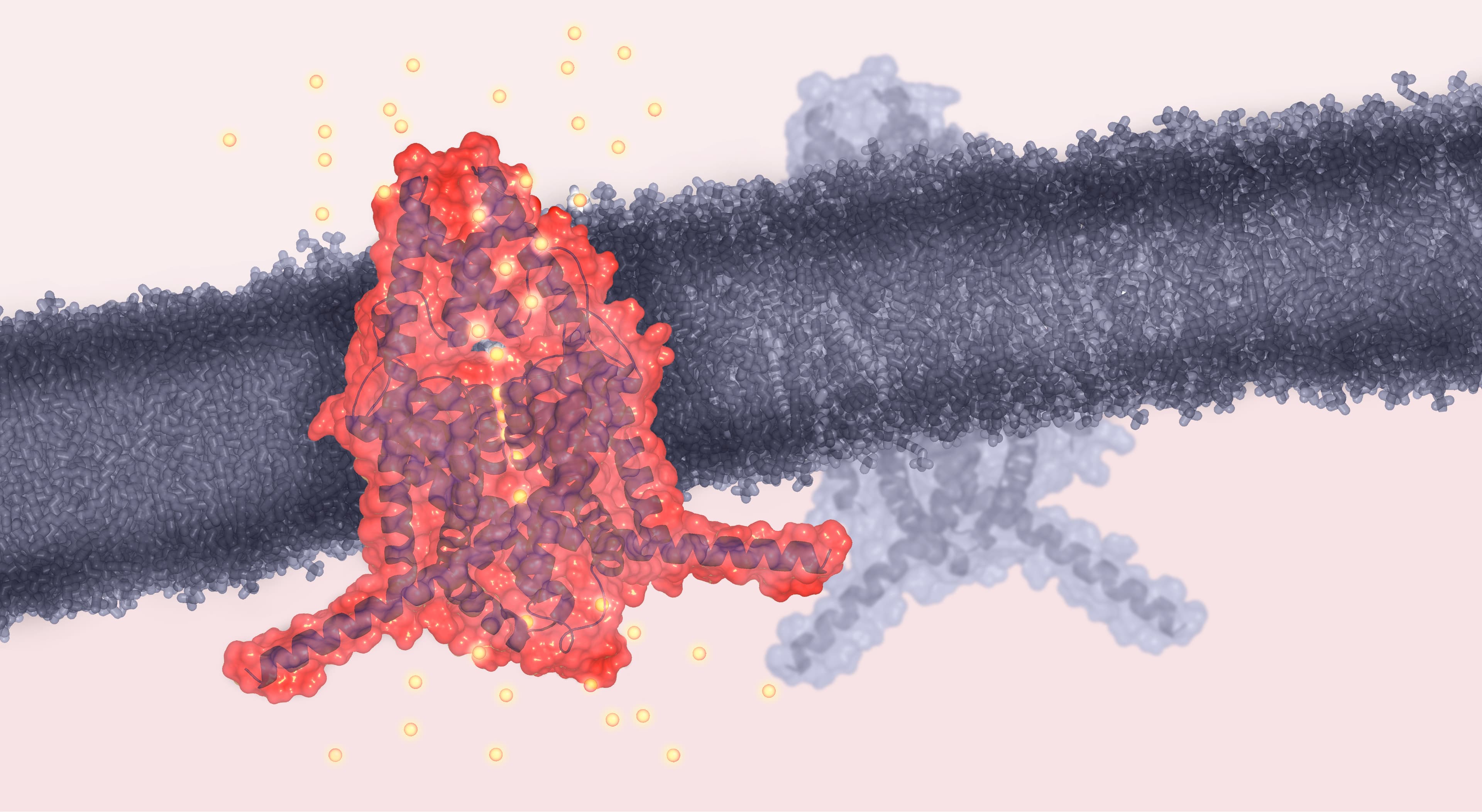
Open or Shut: The Two Faces of TREK2
Side-by-side structural comparison of TREK2's conductive and non-conductive states embedded in a lipid bilayer — the atomic-resolution basis for the mechano- and thermosensitive gating switch.
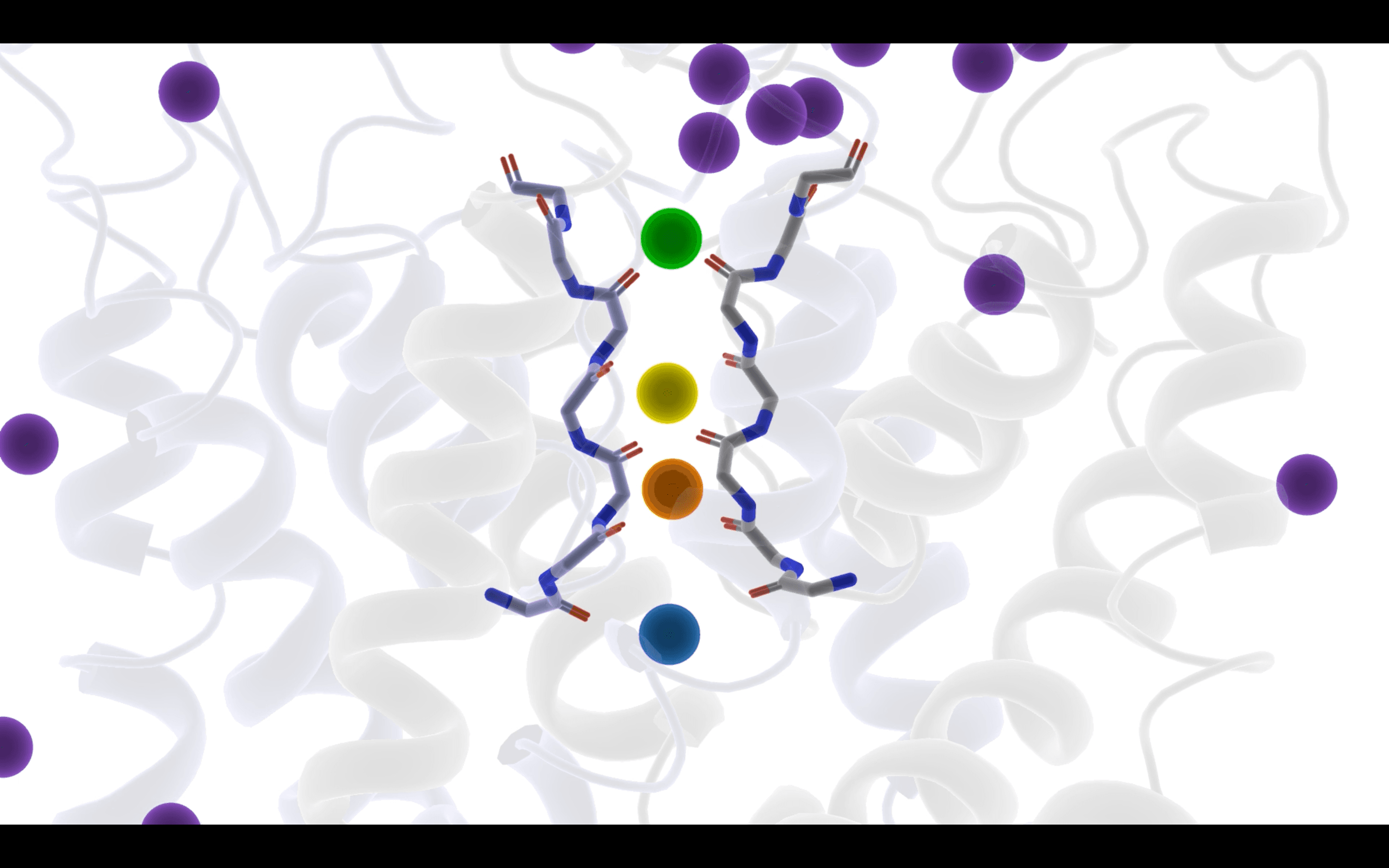
One Microsecond, One Ion at a Time
Cinematic rendering of a 1 µs all-atom MD trajectory: potassium ions queuing, dehydrating, and threading through TREK2's selectivity filter via the knock-on mechanism — selective and fast, one passage at a time.
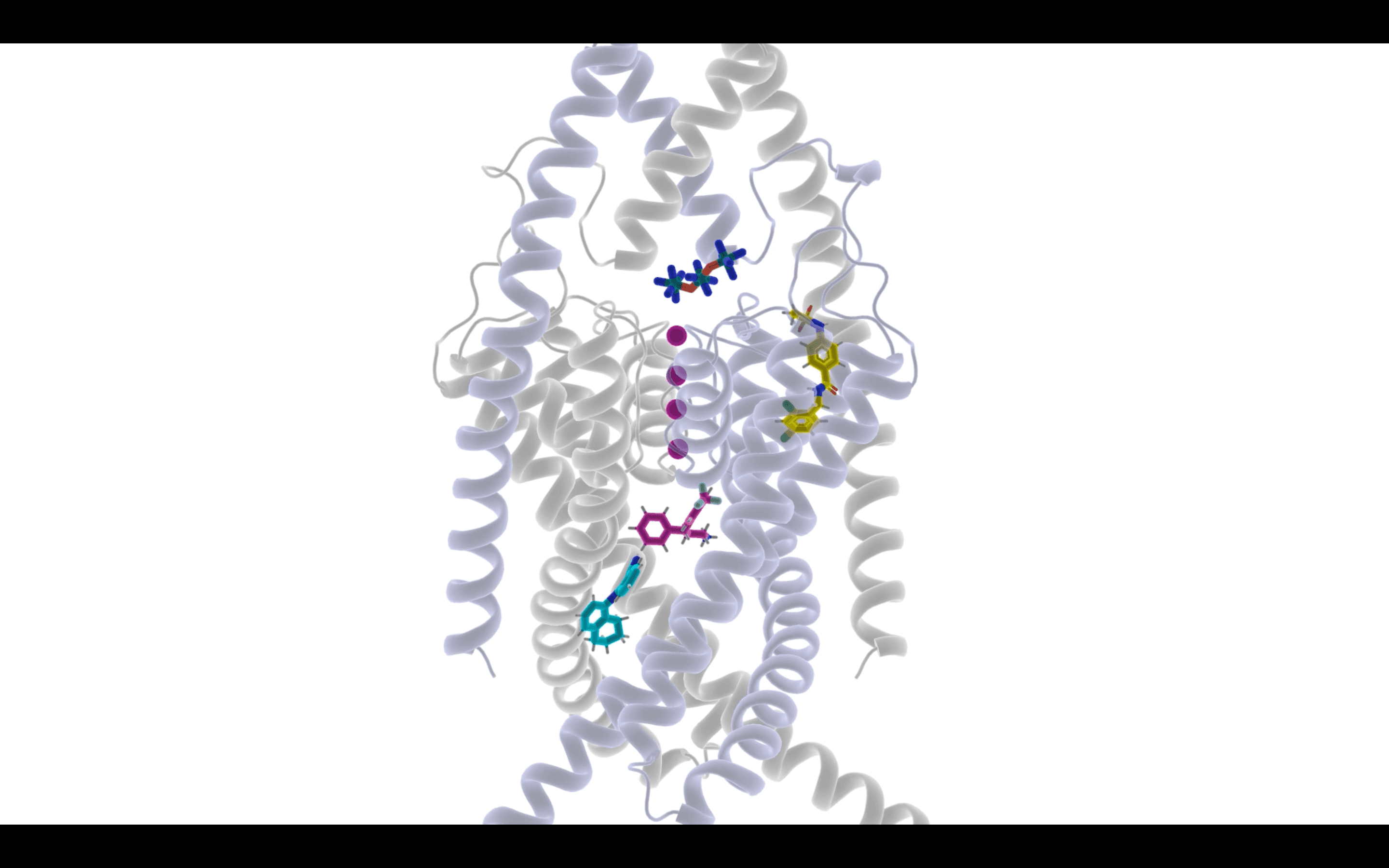
The Druggable Landscape of TREK2
4K cinematic atlas of TREK2's pharmacological surface — orthosteric pockets, fenestration-facing cavities, and lipid-interfacial sites that each access gating through distinct allosteric pathways. One channel, many handles.
Contact
Get in Touch
Open to research collaborations, industry opportunities, and scientific visualization projects.
contact@berketurkaydin.com© 2026 Berke Türkaydin